

Ethiopian
Ethiopian Injera & Doro Wat
Spongy sourdough flatbread meets fiery chicken stew—Ethiopia's communal feast that turns eating into a shared celebration of spice, tradition, and togetherness
July 26, 2024
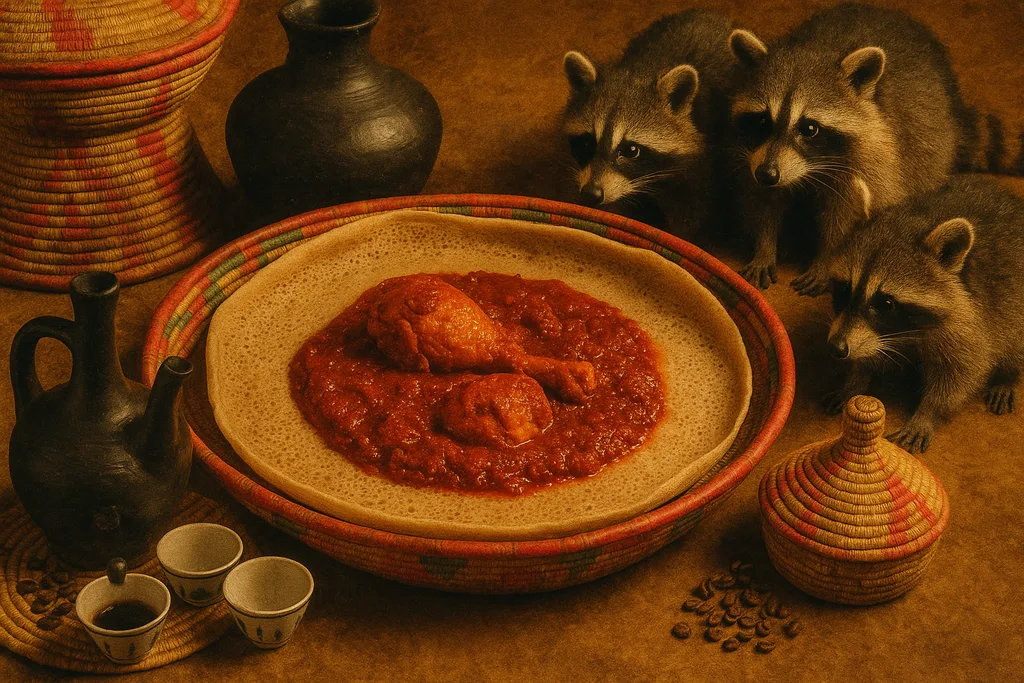
Ethiopian dining transforms meals into ceremonies. Injera—the spongy, tangy flatbread that serves as both plate and utensil—cradles doro wat, a chicken stew so complex and aromatic it seems to contain the essence of an entire spice market. This isn't just food; it's cultural immersion that teaches you to eat with your hands, share from common plates, and understand that the best meals happen when boundaries dissolve.
The injera requires days of fermentation to develop its characteristic sour flavor and spongy texture, while the doro wat builds layers of heat and complexity through berbere spice blend and slow cooking. Together, they create Ethiopia's national dish—a meal that's both rustic and sophisticated, fiery and comforting.
Ingredients
For the injera (Ethiopian flatbread):
🌾 2 cups teff flour (or substitute: 1 cup teff + 1 cup all-purpose flour)
💧 3 cups water
🧂 1/2 teaspoon salt
For the doro wat (chicken stew):
🐔 3 pounds chicken, cut into pieces (thighs and drumsticks preferred)
🥚 6 hard-boiled eggs, peeled
🧅 3 large onions, finely diced
🧄 6 cloves garlic, minced
🫚 2 tablespoons fresh ginger, minced
🌶️ 3-4 tablespoons berbere spice blend
🌶️1 tablespoon tomato paste
🧈 1/4 cup niter kibbeh (Ethiopian spiced butter) or regular butter
🍷 1/2 cup red wine or chicken stock
🧂 Salt to taste
🍋 Lemon juice to taste
For berbere spice blend (if making from scratch):
🌶️ 2 tablespoons dried chilies, stemmed and seeded
🌿 1 teaspoon fenugreek seeds
🌿 1/2 teaspoon coriander seeds
🌿 1/2 teaspoon cardamom pods
🌿 1/4 teaspoon black peppercorns
🌿 1/4 teaspoon allspice berries
🌿 3 whole cloves
🥢 1 cinnamon stick
🌿 1/2 teaspoon ground ginger
🌿 1/2 teaspoon turmeric
🧂 1/2 teaspoon salt
Instructions for Injera
Start the fermentation. Mix teff flour with water in a large bowl until smooth. Cover with a clean cloth and let sit at room temperature for 3 days, stirring once daily. The mixture should develop a sour smell and bubbles—this is the natural fermentation.
Cook the starter. On day 3, take 1 cup of the fermented batter and cook it in a saucepan over medium heat, stirring constantly, until it thickens to a paste-like consistency (about 5 minutes). Cool completely.
Final batter. Mix the cooked starter back into the remaining fermented batter. Add salt and enough water to achieve a thin pancake batter consistency. Let rest for 30 minutes.
Cook the injera. Heat a non-stick pan or specialized injera pan over medium heat. Pour batter to cover the bottom, swirling to create an even layer. Cook until the surface is covered with holes and the edges lift slightly (about 2-3 minutes). Don't flip—injera cooks from one side only.
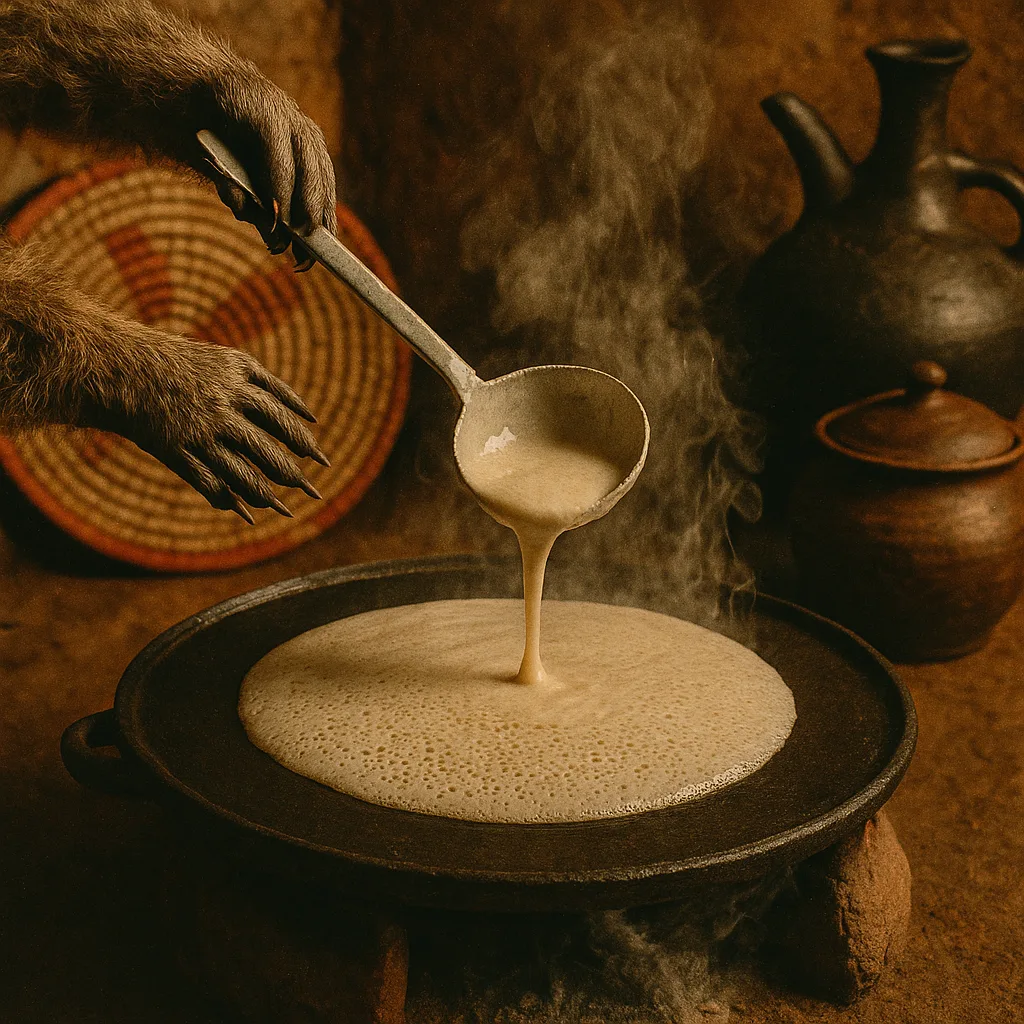
Steam finish. Cover the pan briefly to steam the top, then remove injera and let cool on a clean cloth. Repeat with remaining batter.
Injera & Doro Wat Process Flow
flowchart TD
    subgraph Injera["Injera (3 Days)"]
        A[Mix Teff & Water] --> B[Ferment 3 Days<br/>Stir Daily]
        B --> C[Cook 1 Cup<br/>of Batter]
        C --> D[Cool & Mix Back]
        D --> E[Rest 30 min]
        E --> F[Cook Injera<br/>One Side Only]
        F --> G[Steam & Cool]
    end

    subgraph DoroWat["Doro Wat (2 Hours)"]
        H[Caramelize Onions<br/>No Oil, 15 min]
        I[Make Berbere<br/>If Needed]
        H --> J[Add Butter<br/>& Spices]
        I --> J
        J --> K[Add Garlic<br/>Ginger, Berbere]
        K --> L[Add Tomato<br/>& Liquid]
        L --> M[Brown Chicken<br/>10 min]
        M --> N[Simmer 45-60 min<br/>Until Tender]
        N --> O[Add Eggs<br/>10 min]
        O --> P[Season with<br/>Salt & Lemon]
    end

    subgraph Assembly["Serve Communally"]
        G --> Q[Arrange Injera<br/>on Platter]
        P --> R[Spoon Doro Wat<br/>on Center]
        Q --> S[Communal<br/>Ethiopian Feast]
        R --> S
    end

    style A fill:#4DABF7
    style B fill:#868E96
    style C fill:#FD7E14
    style F fill:#69DB7C
    style H fill:#FF6B6B
    style I fill:#FD7E14
    style M fill:#FF6B6B
    style N fill:#868E96
    style S fill:#69DB7C
Timeline Note: Start injera 3 days before serving. On serving day, prepare doro wat while finishing the injera.
3-Day Preparation Schedule
gantt
    title Ethiopian Feast Preparation Timeline
    dateFormat X
    axisFormat %d

    section Day 1
    Mix Teff & Water     :active, day1, 0, 1d
    Fermentation Begins  :active, ferment1, 0, 1d

    section Day 2
    Continue Fermentation :active, ferment2, 1, 1d
    Stir Once Daily      :milestone, stir1, 1, 0d

    section Day 3
    Final Fermentation   :active, ferment3, 2, 1d
    Cook Starter         :cook-starter, 2, 4h
    Prep Berbere Spices  :berbere, 2, 2h
    Make Final Batter    :final-batter, 2, 30m
    Cook Injera          :cook-injera, 2, 2h
    Prepare Doro Wat     :doro-wat, 2, 2h
    Serve Together       :milestone, serve, 2, 0d
3-Day Coordination Strategy:
- Day 1: Start fermentation (5 minutes of work)
- Day 2: Stir fermentation (2 minutes of work)
- Day 3: Active cooking day (4-5 hours total)
- Plan Day 3 so injera finishes as doro wat is ready to serve
Instructions for Doro Wat
Make berbere if needed. Toast all whole spices in a dry pan until fragrant, then grind with remaining spice ingredients until fine. Store excess in an airtight container.
Caramelize onions slowly. In a large heavy pot, cook diced onions over medium-low heat without oil for 10-15 minutes, stirring frequently, until golden and caramelized.
Build the spice base. Add niter kibbeh or butter to the onions. Stir in minced garlic, ginger, and berbere spice blend. Cook for 2-3 minutes until fragrant.
Add tomato and liquid. Stir in tomato paste and cook for 1 minute. Gradually add wine or stock, stirring to create a thick sauce.
Brown the chicken. Add chicken pieces to the pot, turning to coat with the spice mixture. Cook for 10 minutes, allowing chicken to brown slightly.
Slow simmer. Add enough water to barely cover the chicken. Bring to a gentle simmer, cover, and cook for 45 minutes to 1 hour until chicken is tender.
Add eggs and finish. Gently add hard-boiled eggs to the stew and simmer for another 10 minutes. Season with salt and lemon juice to taste.
Serve communally. Arrange injera on a large platter, spoon doro wat over the center, and provide additional injera alongside for scooping.
Technique Notes
Injera should have a spongy, slightly sour texture with visible holes throughout. If your first attempts are too thick or don't have holes, adjust the batter consistency.
Doro wat should be thick enough to sit on the injera without running off. The chicken should be fall-off-the-bone tender.
The berbere spice blend is the soul of the dish—don't substitute with generic "curry powder."
Cultural Context
Ethiopian meals are communal affairs where everyone eats from the same platter using pieces of injera as utensils. This builds community and connection.
Doro wat is traditionally served for special occasions and holidays, often accompanied by other vegetable stews (vegetarian options for fasting periods).
The coffee ceremony often follows the meal, creating a complete cultural experience.
Storage & Make-Ahead
Injera keeps for several days wrapped in plastic or cloth. It actually improves slightly as it ages.
Doro wat tastes better the next day as flavors meld. Reheat gently and add water if needed.
Berbere spice blend keeps for months in an airtight container and improves with age.
Remix Ideas
Vegetarian version: Replace chicken with lentils or vegetables for a fasting-friendly option.
Lamb doro wat: Use lamb for a richer, more intense flavor.
Quick injera: Some recipes use self-rising flour and club soda for faster results, though texture differs.
Berbere variations: Each Ethiopian family has their own berbere blend—experiment with proportions.
Perfect injera and doro wat should transport you to the Ethiopian highlands, where meals are celebrations and food creates community. The tangy bread, fiery stew, and communal eating style remind you that some cuisines offer more than nutrition—they offer cultural immersion that changes how you think about sharing food and building connections around the table.
You might also like
Korean Kimchi
Traditional fermented napa cabbage kimchi with gochugaru and fish sauce - a tangy, spicy introduction to Korean fermentation
Mole Negro Oaxaqueño
A complex, rich black mole from Oaxaca with over 30 ingredients
German Sauerbraten
Three-day marinated beef that transforms tough cuts into silky, tangy perfection—Germany's lesson in patience and the magic of controlled fermentation
Panang Curry
Thailand's rich, peanutty cousin to red curry — a thick, glossy coconut curry with beef, kaffir lime, and just enough chili heat