

Thai
Panang Curry
Thailand's rich, peanutty cousin to red curry — a thick, glossy coconut curry with beef, kaffir lime, and just enough chili heat
June 28, 2026
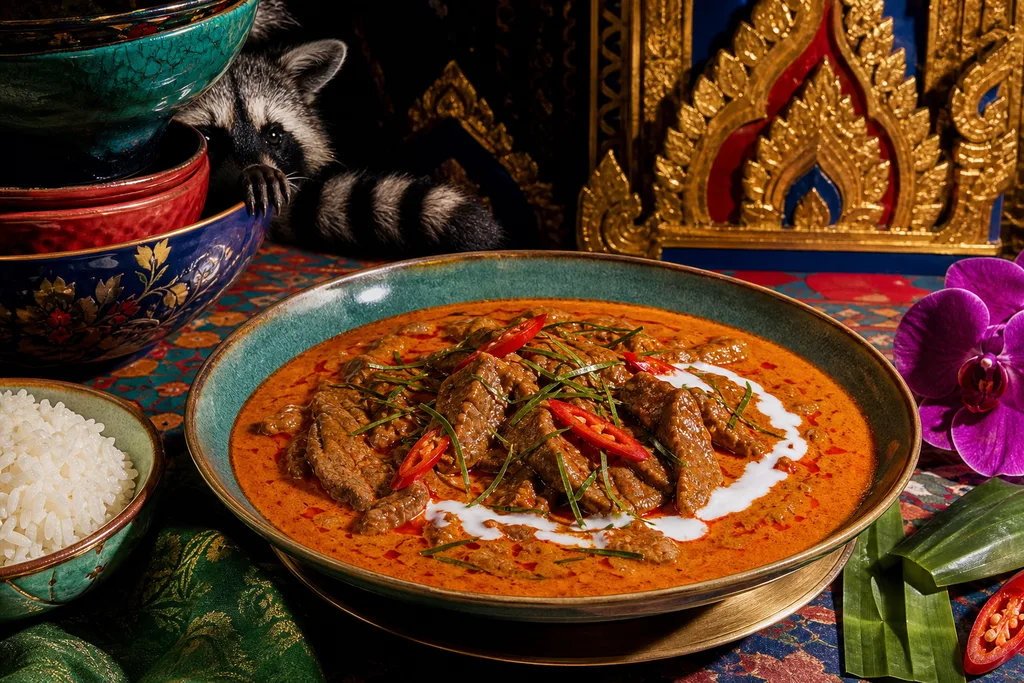
Panang (or phanaeng) is what happens when Thai red curry decides to be richer, thicker, and a little sweeter. Where a red or green curry is loose and soupy, panang clings—it's a thick, glossy sauce built on coconut cream and ground peanuts, with a deep chili-red color and a mellower heat that lets the aromatics shine. It's the curry I make when I want something luxurious without a lot of fuss.
The trick that makes it sing is "cracking" the coconut cream: you fry the curry paste in thick coconut cream until the oil splits out and goes glossy and fragrant. That step builds the whole flavor base. After that, it comes together fast. Don't drown it in liquid—panang is meant to be a thick, almost saucy coat for the meat, not a broth. Serve it with plenty of jasmine rice to soak up every glossy red drop.
Ingredients
For the curry paste (or use a good store-bought panang paste):
🌶️ 6–8 dried red chilies, soaked and seeded
🌿 2 stalks lemongrass, sliced
🫚 1 thumb galangal, sliced
🧄 4 cloves garlic
🧅 3 shallots
🥜 2 tbsp roasted peanuts
🌰 1 tsp coriander seeds, toasted
🧂 1 tsp shrimp paste
🍃 Zest of 1 kaffir lime (or regular lime)
For the curry:
🥩 1 lb beef (sirloin or chuck), thinly sliced
🥥 1 can (14 oz) coconut milk, cream separated from liquid
🥜 2 tbsp peanut butter or extra ground peanuts
🐟 2 tbsp fish sauce
🍯 1 tbsp palm sugar (or brown sugar)
🍃 4 kaffir lime leaves, finely sliced
🌶️ 1 red chili, sliced, for garnish
🌿 Thai basil leaves
Instructions
Make (or grab) the paste. If making from scratch, pound the soaked chilies, lemongrass, galangal, garlic, shallots, peanuts, coriander, shrimp paste, and lime zest into a thick, smooth paste with a mortar and pestle (or blitz in a food processor with a splash of water). A good store-bought panang paste is a totally legitimate shortcut.
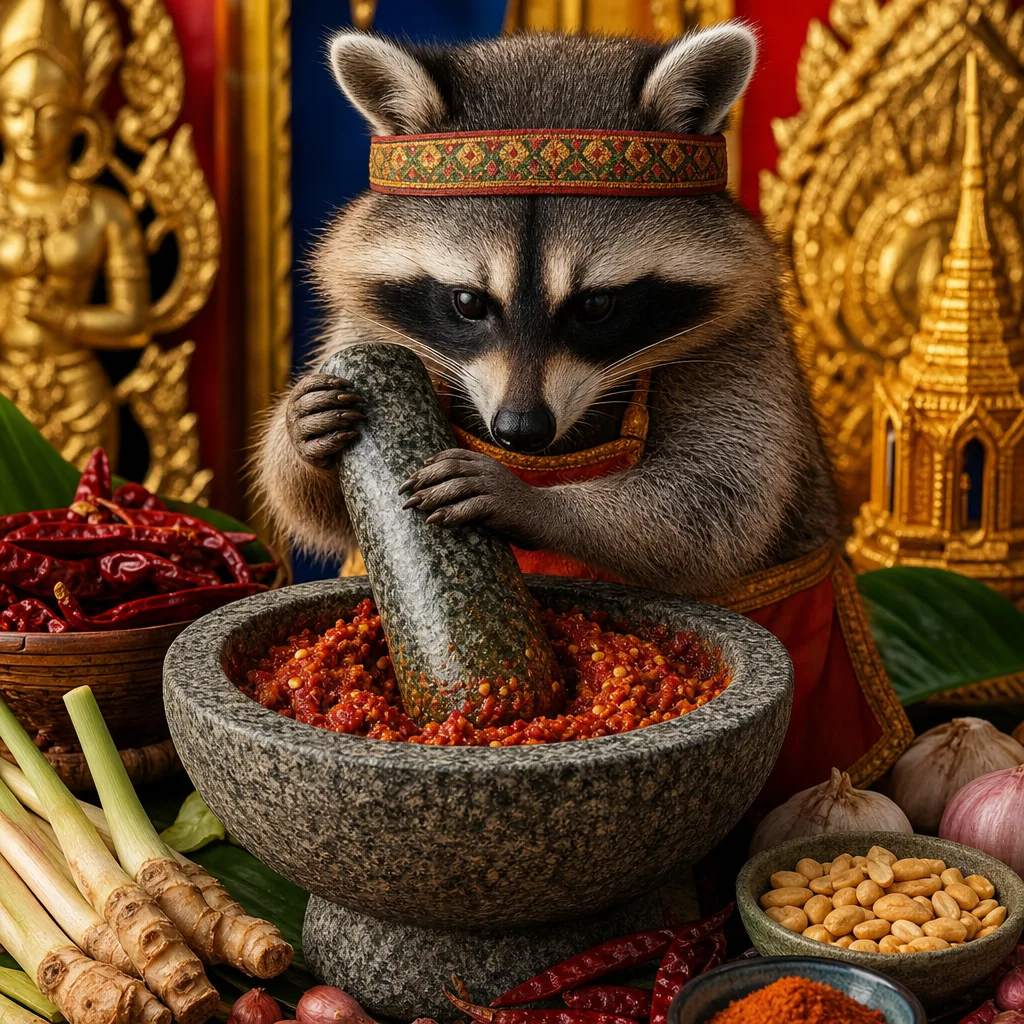
Crack the coconut cream. Spoon the thick coconut cream (the solid part at the top of the can) into a wok over medium heat. Let it bubble and reduce until the oil starts to separate out and it looks glossy, 3–5 minutes. This is the most important step—don't rush it.
Fry the paste. Add the curry paste to the cracked cream and fry, stirring constantly, until it's deeply fragrant and darkened, another 2–3 minutes. Your kitchen will smell incredible.
Add the beef. Stir in the sliced beef and coat it in the paste, cooking until it's just seared on the outside.
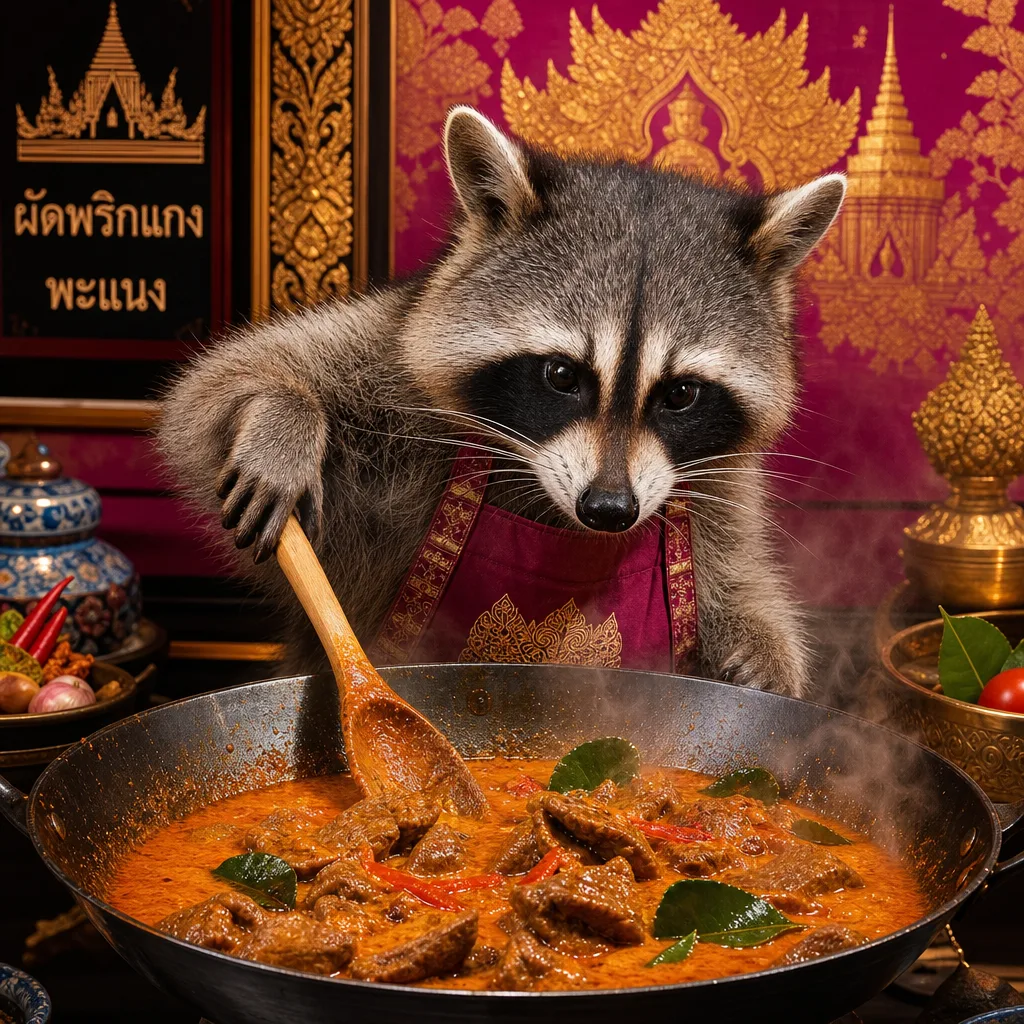
Loosen and season. Pour in the remaining coconut milk plus the peanut butter, fish sauce, and palm sugar. Stir until smooth. Simmer gently until the beef is tender and the sauce is thick and glossy—it should coat the back of a spoon, not run like soup. Add a splash of water only if it gets too thick.
Finish. Stir in most of the sliced kaffir lime leaves. Taste and balance: it should be rich, a little sweet, savory, with gentle heat. Garnish with the rest of the lime leaves, sliced red chili, and Thai basil.
How Panang Comes Together
flowchart LR
    subgraph Paste["Curry Paste"]
        A[Soak Dried<br/>Chilies]
        A --> B[Pound with<br/>Aromatics + Peanuts]
    end

    subgraph Base["Build the Base"]
        C[Crack Coconut<br/>Cream until oil splits]
        C --> D[Fry Paste<br/>2-3 min]
        D --> E[Sear Beef<br/>in paste]
    end

    subgraph Finish["Finish the Sauce"]
        F[Add coconut milk<br/>+ peanut + fish sauce]
        F --> G[Simmer thick<br/>& glossy]
        G --> H[Kaffir lime<br/>+ basil]
    end

    B --> D
    E --> F
    H --> I[Serve thick<br/>over jasmine rice]

    style C fill:#FD7E14
    style D fill:#FF6B6B
    style G fill:#FF6B6B
    style H fill:#69DB7C
    style I fill:#FFD700
What makes it panang, not red curry:
- Ground peanuts in the paste and sauce
- Thick and clingy, not soupy — keep the liquid low
- Crack the coconut cream first; that glossy split is the flavor
- Milder, rounder heat than red or green curry
Variations
Panang Gai: Use chicken thighs instead of beef—quicker to cook and very popular.
Panang Neua (classic beef): The traditional version, often made with tougher cuts simmered longer until meltingly tender.
Vegetarian Panang: Swap the beef for fried tofu and seasonal vegetables, use soy sauce in place of fish sauce, and skip the shrimp paste. The peanut-coconut base carries it beautifully.
Cultural Notes
Panang curry's name is often linked to the island of Penang in Malaysia, hinting at the cross-cultural trade routes that shaped Thai cuisine—though it's been thoroughly Thai for generations. It sits at the milder, richer end of the Thai curry spectrum, which makes it a favorite gateway curry for people still building up their chili tolerance.
It shares the same coconut-and-aromatics DNA as the Thai Green Curry Vegetables, but where green curry is fresh, herbal, and loose, panang is deep, nutty, and thick. If you've got a mortar and pestle out for the paste, it's worth making a double batch—it freezes well, and you'll want panang again sooner than you think. Serve with jasmine rice and maybe a cold Thai Iced Tea to round out the meal.
You might also like

Beef Rendang
Rich, aromatic Indonesian slow-cooked beef that melts in your mouth
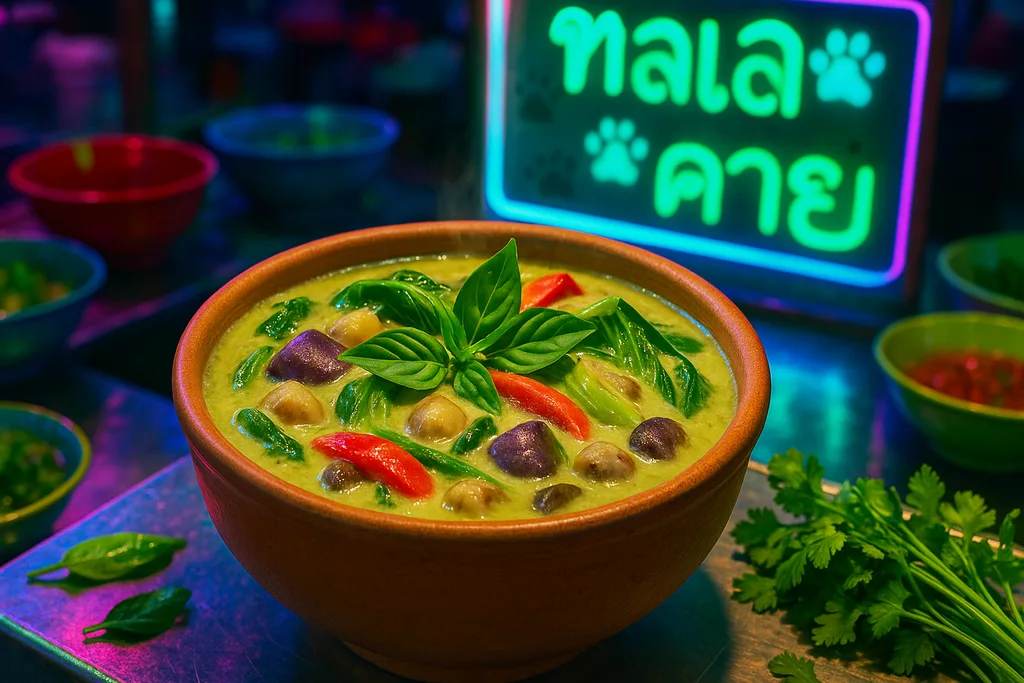
Thai Green Curry with Vegetables
Vibrant vegetarian green curry with homemade paste, coconut milk, and fresh Thai basil
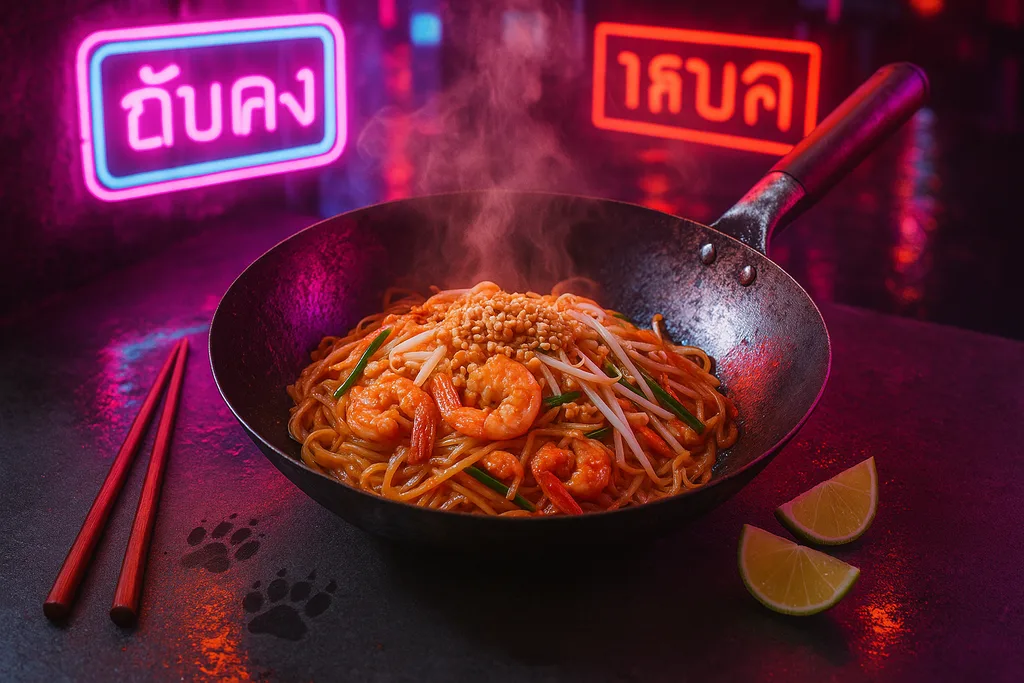
Pad Thai
Street-style Pad Thai with tamarind's sweet-sour punch and that perfect wok hei char
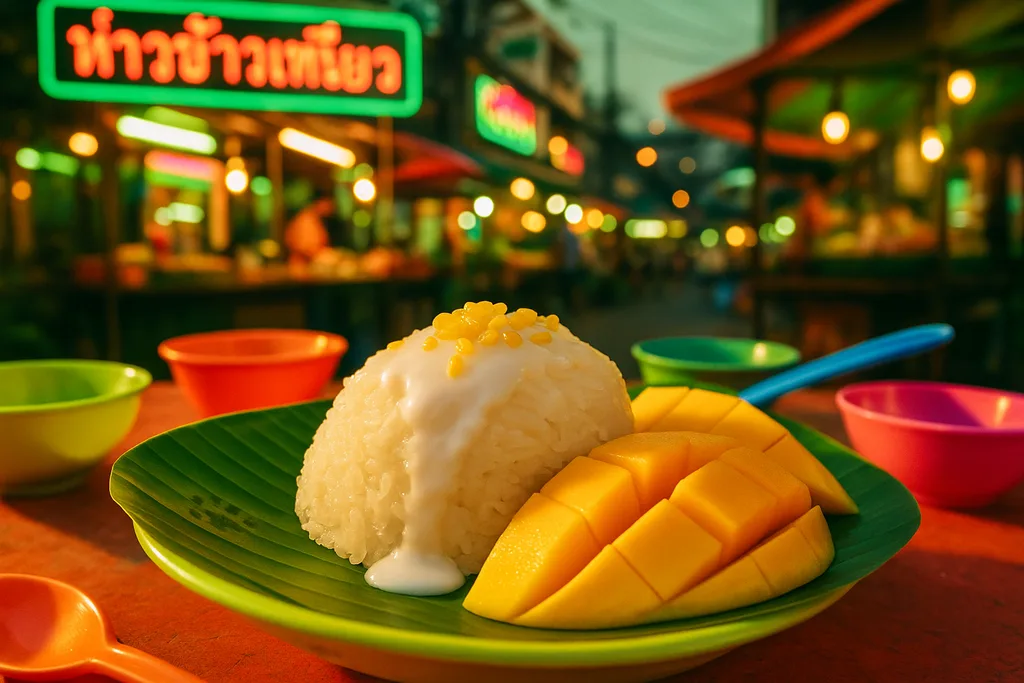
Thai Mango Sticky Rice
Sweet coconut sticky rice paired with ripe mango - Thailand's beloved dessert that tastes like summer sunshine