

Korean
Korean Kimchi
Traditional fermented napa cabbage kimchi with gochugaru and fish sauce - a tangy, spicy introduction to Korean fermentation
July 16, 2024
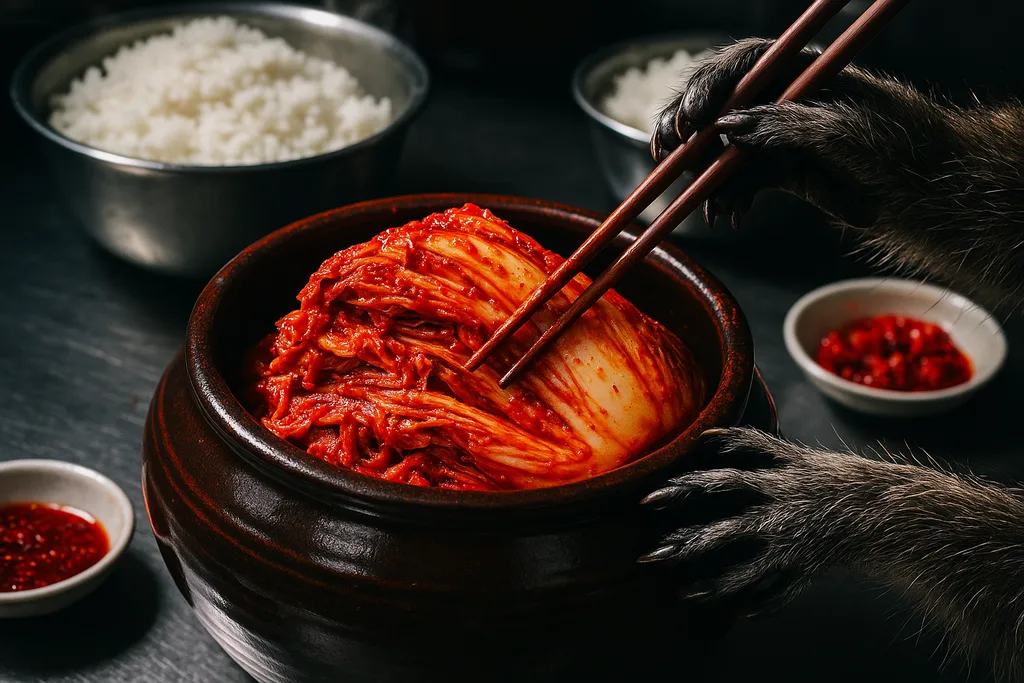
Controlled chaos in a jar—that's what kimchi really is. Salt draws water from cabbage, gochugaru adds fire, and time transforms everything into something that's part pickle, part condiment, part obsession. Good foragers know that the best flavors come from letting beneficial bacteria do the work.
Making kimchi is like learning a secret language. The cabbage talks through salt, the gochugaru whispers promises of heat, and time transforms everything into something completely different yet somehow inevitable. This isn't just pickle-making – it's controlled chaos in a jar.
Ingredients
🥬 2 pounds napa cabbage (about 1 large head)
🧂 1/4 cup coarse sea salt (for brining)
🌶️ 2 tablespoons gochugaru (Korean red pepper flakes)
🧄 6 cloves garlic, minced
🫚 1 tablespoon fresh ginger, grated
🧅 4 green onions, chopped
🐟 2 tablespoons fish sauce
🍯 1 tablespoon rice vinegar
🥄 1 teaspoon sugar
🥕 1 small daikon radish, julienned (optional)
Instructions
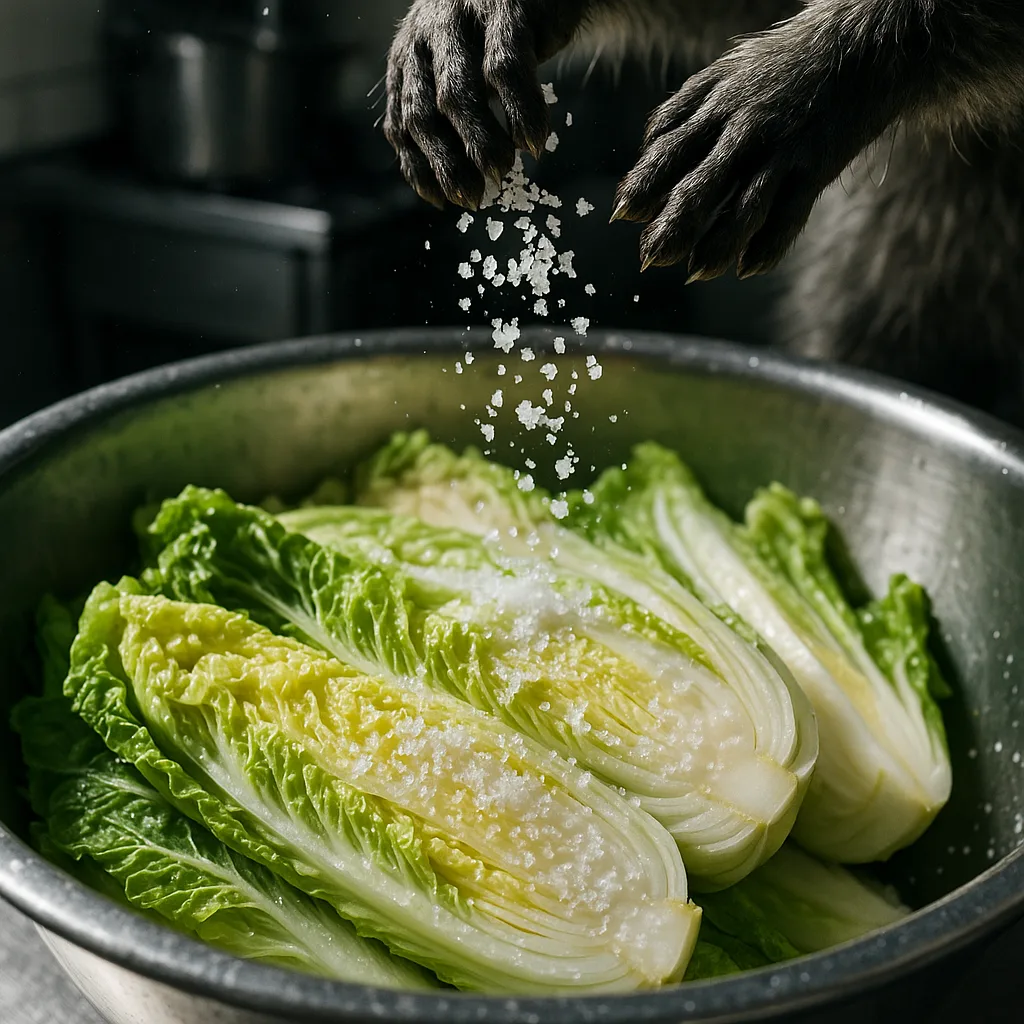
Prep the Cabbage: Cut the napa cabbage lengthwise, then into 2-inch pieces. In a large bowl, toss with coarse salt until every leaf is coated. The cabbage will start releasing water immediately – this is exactly what we want. Cover and let sit for 2-3 hours, tossing every 30 minutes.
Make the Paste: While the cabbage does its salty thing, mix gochugaru, minced garlic, grated ginger, fish sauce, rice vinegar, and sugar in a small bowl. This paste should be thick and aromatic – taste it and adjust heat with more gochugaru or balance with a pinch more sugar.
Rinse and Drain: After 2-3 hours, the cabbage will have released a surprising amount of liquid. Rinse it thoroughly under cold water – three times minimum. You want to remove excess salt but keep the cabbage slightly salty. Drain well and squeeze gently to remove excess water.
Mix and Ferment: In a clean bowl, combine the drained cabbage with the gochugaru paste, green onions, and daikon if using. Wear gloves – gochugaru stains everything red and the mixture is potent. Mix thoroughly until every piece of cabbage is coated.
Pack the kimchi into clean glass jars, pressing down to eliminate air bubbles. Leave about an inch of headspace. The liquid from the cabbage should cover the vegetables – if not, add a little salted water (1 tsp salt in 1 cup water).
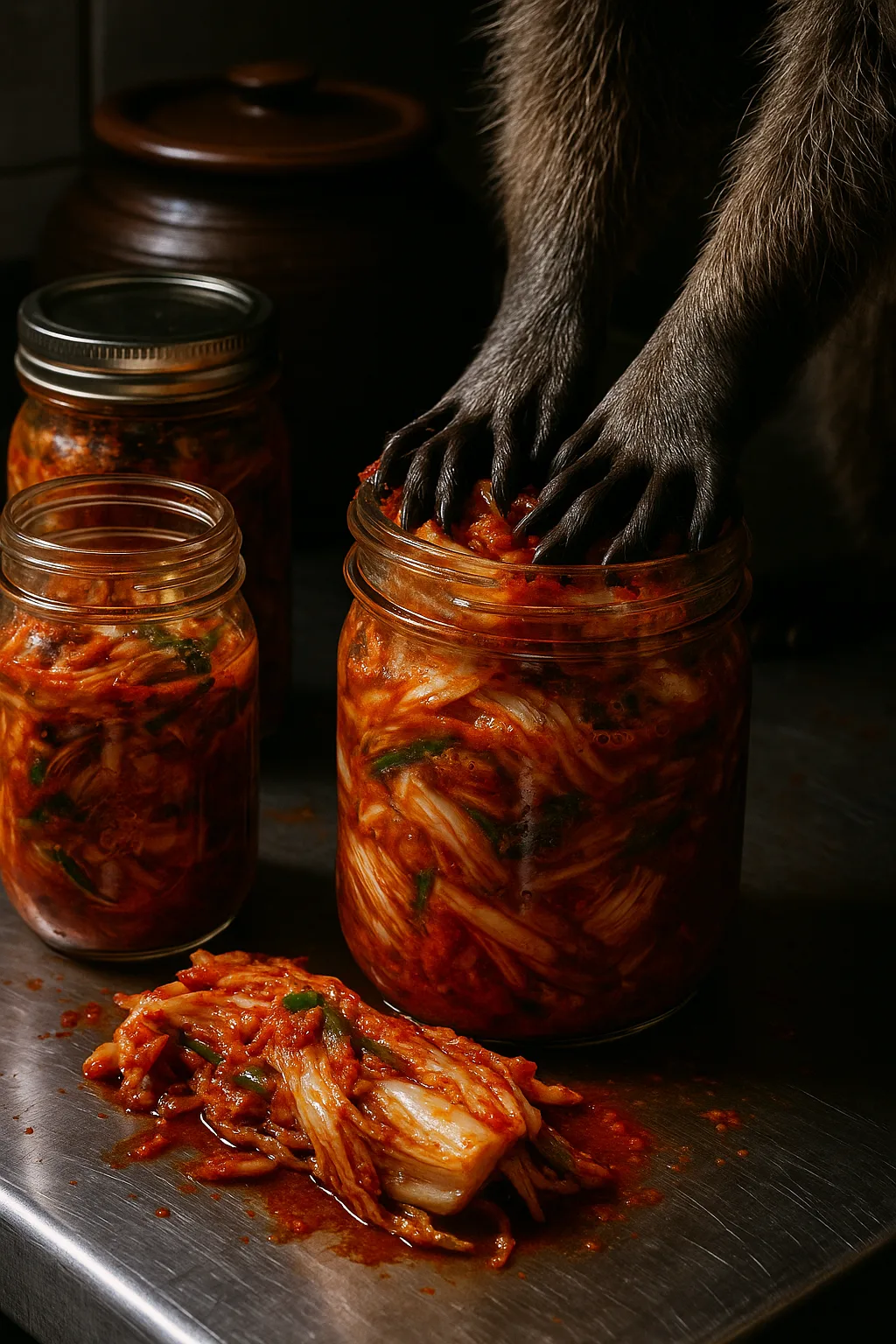
Wait for Magic: Leave at room temperature for 1-3 days, depending on how warm your kitchen is and how sour you like it. Taste daily – it starts mild and gets tangier. Once it reaches your preferred level of funk, refrigerate. It will continue fermenting slowly and stay good for months.
Kimchi Fermentation Timeline
timeline
    title Kimchi Fermentation Journey

    Day 0 : Fresh Mix
          : Bright red color
          : Crunchy texture
          : Salty & spicy

    Day 1 : Early Fermentation
          : Bubbles appear
          : Slight tang developing
          : Still very crunchy

    Day 2-3 : Active Fermentation
            : Visible bubbling
            : Sour notes emerging
            : Softening slightly
            : Move to fridge

    Week 1 : Young Kimchi
           : Balanced sour-spicy
           : Good crunch remains
           : Complex flavors

    Week 2-3 : Mature Kimchi
             : Deep fermented flavor
             : Softer texture
             : Perfect for cooking

    Month 1+ : Aged Kimchi
             : Very sour & funky
             : Soft texture
             : Best for stews & fried rice
Gochugaru Heat Level Guide
flowchart TD
    A[Choose Your Gochugaru] --> B{Heat Preference?}

    B -->|Mild| C[1 tbsp Gochugaru]
    B -->|Medium| D[2 tbsp Gochugaru - Standard]
    B -->|Hot| E[3 tbsp Gochugaru]
    B -->|Extra Hot| F[3 tbsp + 1 tsp Cayenne]

    C --> G{First Time Making?}
    D --> G
    E --> G
    F --> G

    G -->|Yes| H[Start with LESS]
    G -->|No| I[Trust Your Taste]

    H --> J[Add More Next Batch]
    I --> K[Perfect Amount]
    J --> K

    K --> L{After Day 1 Taste}
    L -->|Too Mild| M[Add More Gochugaru]
    L -->|Too Hot| N[Dilute with Fresh Cabbage]
    L -->|Perfect| O[Continue Fermenting]

    style D fill:#FFD93D
    style K fill:#69DB7C
    style O fill:#4DABF7
    style N fill:#FF6B6B
Serving & Remixing
Fresh kimchi (1-2 days) is crunchy and bright. Aged kimchi (1+ weeks) gets softer and more complex – perfect for kimchi fried rice or stews. I eat it straight from the jar, pile it on rice, or use it as a condiment for everything from eggs to grilled cheese.
The beauty of kimchi is its evolution. What starts as salted cabbage becomes something entirely different through time and beneficial bacteria. Each batch teaches you something new about patience and transformation.
Cultural Notes
Kimchi-making (kimjang) is traditionally a communal activity in Korea, with families gathering to prepare large batches for winter. The process varies by region and family, with some recipes passed down through generations. My version is fairly traditional but accessible – authentic gochugaru makes all the difference, so seek it out at Korean markets.
The fermentation isn't just for flavor – it's preservation, nutrition, and culture all packed into one jar. Every Korean family has their own kimchi style, and now you can start developing yours.
This recipe is part of my exploration of Fermentation Journey – the ancient art of controlled bacteria that transforms simple ingredients into complex flavors. For more about Korean fermentation culture and the communal spirit of kimjang, check out my Korea travel notes.
You might also steal 🥄
Ethiopian Injera & Doro Wat
Spongy sourdough flatbread meets fiery chicken stew—Ethiopia's communal feast that turns eating into a shared celebration of spice, tradition, and togetherness

Classic Sauerkraut
Transform cabbage and salt into tangy, probiotic-rich sauerkraut through the magic of lacto-fermentation
Mole Negro Oaxaqueño
A complex, rich black mole from Oaxaca with over 30 ingredients
German Sauerbraten
Three-day marinated beef that transforms tough cuts into silky, tangy perfection—Germany's lesson in patience and the magic of controlled fermentation