

Indian
Morning Masala Chai & Fresh Paratha
The perfect Indian breakfast duo - aromatic spiced tea paired with warm, flaky flatbread
July 15, 2024
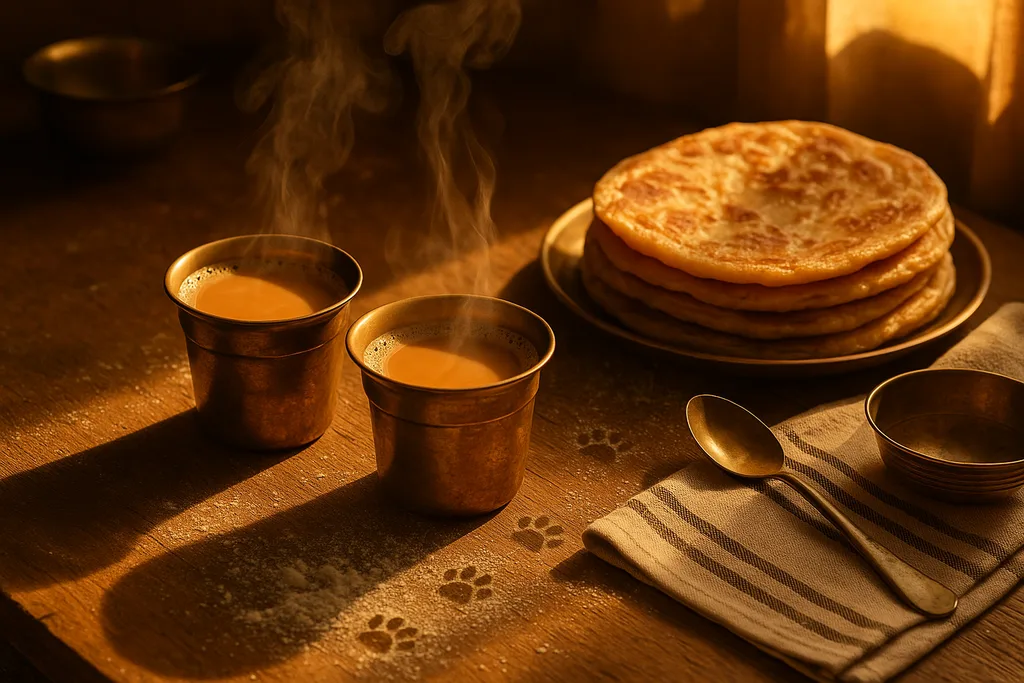
Aromatic spiced tea paired with warm, flaky flatbread—that's the perfect Indian breakfast duo. The chai gets its character from properly boiling milk with whole spices until it threatens to foam over, while paratha becomes flaky through a simple folding technique that creates buttery layers without the fuss.
I learned to make this breakfast combo during those early weeks when jet lag had me up at dawn anyway. The chai wallah taught me his blend of spices, and the woman running the paratha stall next door showed me how to get those perfect flaky layers without making a complete mess of the kitchen.
This isn't just breakfast - it's a morning ritual that transforms the entire start of your day.
Masala Chai
🫖 2 cups whole milk
🫖 1 cup water
🫖 2 tablespoons loose black tea (Assam or Orange Pekoe)
🫖 2 green cardamom pods, lightly crushed
🫖 1 inch fresh ginger, sliced thin
🫖 1 cinnamon stick
🫖 3-4 whole cloves
🫖 1/4 teaspoon fennel seeds
🫖 2-3 tablespoons sugar (adjust to taste)
🫖 Pinch of black pepper (optional)
Fresh Paratha
🥄 2 cups all-purpose flour
🥄 1/2 teaspoon salt
🥄 1 tablespoon ghee or oil
🥄 3/4 cup warm water
🥄 Extra ghee for cooking
🥄 Pinch of ajwain (carom seeds) - optional but worth finding
flowchart LR
    subgraph "Chai Pot"
        A[Toast Spices<br/>30 sec] --> B[Add Water<br/>Boil 2-3 min]
        B --> C[Add Tea<br/>Boil 2 min]
        C --> D[Add Milk<br/>Boil 1 min]
        D --> E[Add Sugar<br/>Final Boil]
        E --> F[Strain & Serve]
    end

    subgraph "Paratha Board"
        G[Mix Dough<br/>5-6 min] --> H[Rest 15 min]
        H --> I[Roll & Fold<br/>Create Layers]
        I --> J[Roll Again]
        J --> K[Cook on Tawa<br/>2-3 min/side]
    end

    style A fill:#FF6B6B
    style B fill:#4DABF7
    style C fill:#868E96
    style D fill:#FFD93D
    style K fill:#FF6B6B
Morning Routine Timeline
gantt
    title Perfect Morning Workflow
    dateFormat HH:mm
    axisFormat %H:%M

    section Prep
    Make dough & rest     :done, dough, 07:00, 20m
    Toast spices          :done, spice, 07:05, 1m

    section Parallel Cooking
    Start chai water      :active, water, 07:20, 5m
    Roll first paratha    :active, roll1, 07:20, 3m
    Cook paratha 1        :cook1, after roll1, 3m
    Add tea & milk        :tea, 07:25, 3m
    Roll paratha 2        :roll2, after cook1, 3m
    Final chai boil       :boil, after tea, 2m
    Cook paratha 2        :cook2, after roll2, 3m

    section Serve
    Both ready together   :serve, after boil cook2, 1m
Making the Chai
Start with the spices in a heavy-bottomed pot - no oil, just toast them for 30 seconds until fragrant. Add water and bring to a rolling boil. The key here is patience; let it boil hard for 2-3 minutes to extract every bit of flavor from those spices.
Add the tea leaves and boil another 2 minutes until the water turns deep amber. Now comes the milk - pour it in slowly and watch the color transform into that perfect caramel shade.
Let it come to a proper boil where it threatens to foam over the edges. This is when chai gets its character - that slight caramelization of milk that you can't get any other way. Add sugar and let it boil another minute.
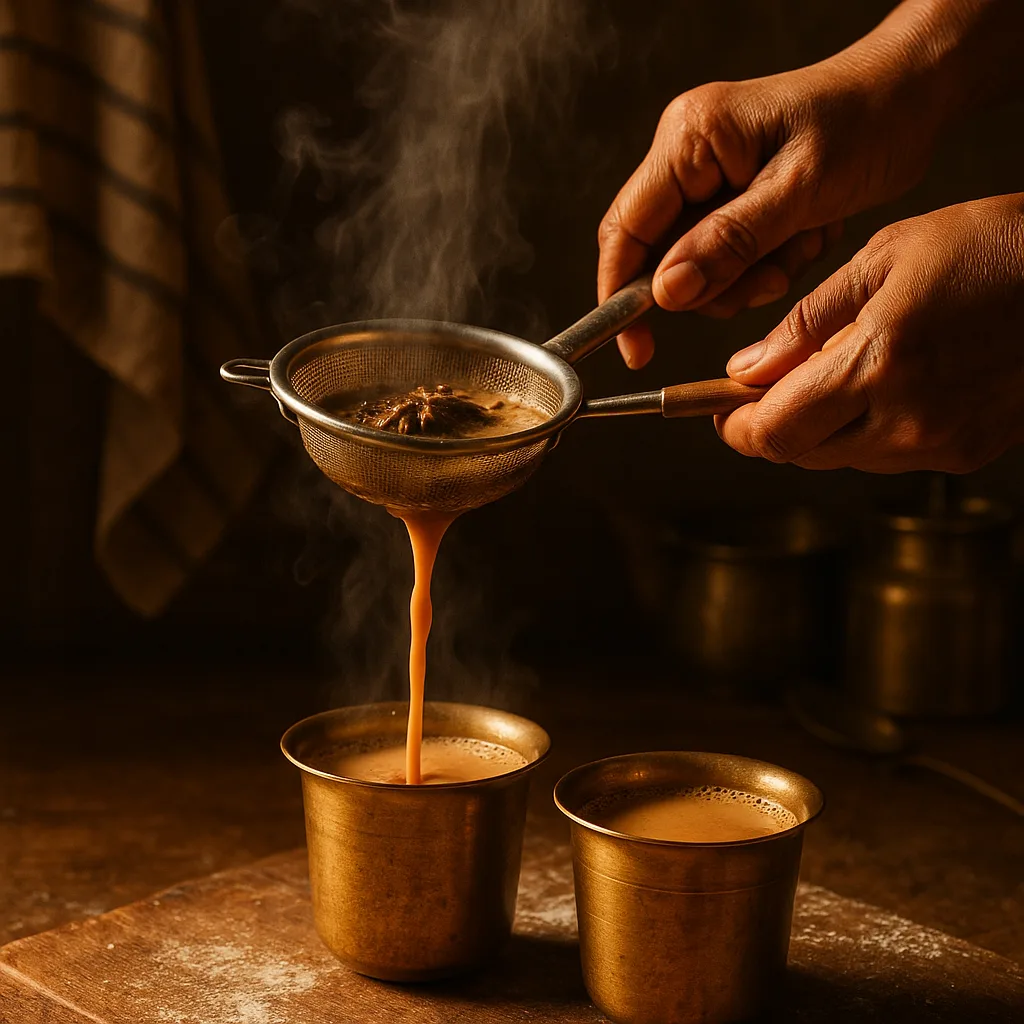
Strain through a fine mesh into cups, pressing the solids to extract every drop of flavor. The result should be strong enough to wake the dead and smooth enough to soothe your soul.
Making the Paratha
Mix flour and salt in a bowl. Rub in the ghee with your fingertips until the mixture resembles coarse breadcrumbs. Add water gradually, mixing until you have a soft but not sticky dough. If you're using ajwain, add it with the flour.
Knead for 5-6 minutes until smooth and elastic. Let it rest covered for 15 minutes - this makes rolling much easier.
Divide into 6-8 pieces. Roll each into a thin circle, brush with ghee, then fold in half. Brush again, fold into quarters. This creates those flaky layers that make paratha special.
Roll the folded triangle back into a circle, being gentle so you don't press out all the air pockets you just created.
Heat a cast iron pan or tawa over medium-high heat. Cook each paratha for 1-2 minutes per side, brushing with ghee and pressing gently with a spatula to help it puff up. They're done when golden brown spots appear and they sound hollow when tapped.
Serving & Variations
Serve immediately while the paratha is still warm and the chai is steaming. The contrast is perfect - the rich, spiced milk against the simple, buttery bread.
For the chai, try adding a bruised mint leaf or a pinch of saffron for special occasions. Some people love a tiny piece of jaggery instead of sugar for deeper sweetness.
With paratha, you can stuff them with spiced potatoes, paneer, or leftover dal. But honestly, plain paratha with good chai doesn't need improvement.
The beauty of this combination is in its simplicity and the ritual of making it. It's meditation disguised as breakfast, a way to ease into the day instead of shocking yourself awake.
In Mumbai, they say chai tastes different depending on who makes it and how they learned. Every family has their proportions, their special addition, their way of knowing when it's perfect. This is mine - borrowed from a street corner and refined in my own kitchen, but carrying the same morning magic that's been waking people up properly for generations.
You might also like
Indian Masala Chai
Cardamom, ginger, and cinnamon steeped with black tea and milk—India's aromatic embrace that turns simple tea into liquid comfort
Moroccan Lamb Tagine
Slow-cooked lamb with apricots, almonds and warming spices in an authentic tagine pot - a window into Morocco's soul
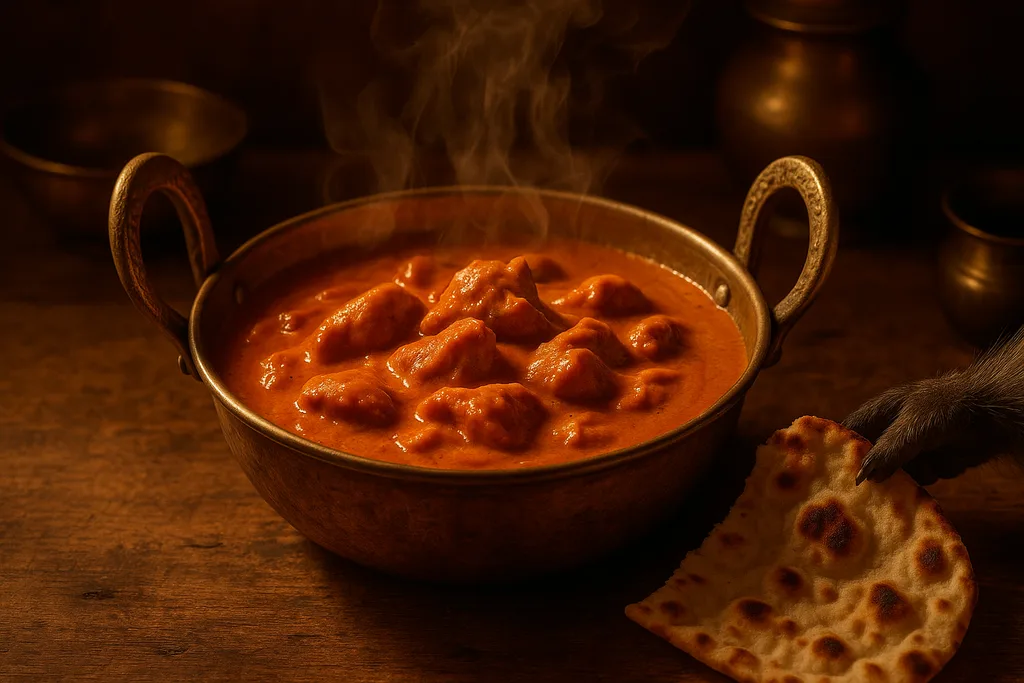
Indian Butter Chicken
Rich, creamy tomato-based curry that's become India's most beloved export - silky chicken in a sauce that dreams are made of